Interview
Srinivasulu Reddy Battu
United States
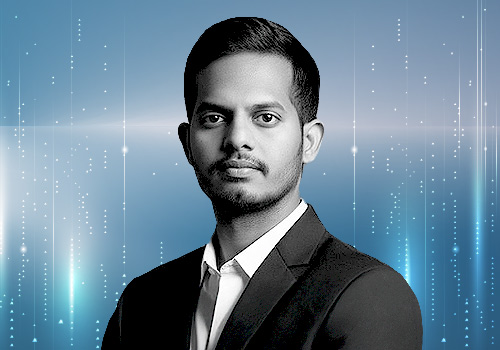
Srinivasulu Reddy Battu is a senior SAP engineer with a strong background in large-scale enterprise projects. He combines technical expertise with innovation to tackle real-world data security challenges effectively.
1 Congratulations on your achievements in the TITAN Innovation Awards! Can you introduce a little about yourself, your background or your company?
Thank you! I'm Srinivasulu Reddy Battu, based in New Jersey. I work as a senior software engineer specializing in SAP S/4HANA development, including HANA modeling and ABAP programming. My journey started in India working on large-scale SAP implementations for manufacturing and chemical industries. Over the years, I've developed a strong interest in data security challenges within enterprise systems. This innovation came from combining my SAP expertise with an interest in solving real privacy problems that businesses face every day.
2 What motivated you to develop this submission / achievement, and how did it align with your personal or company goals?
The motivation came from a common problem I kept seeing. When businesses process sensitive financial data—like posting transactions or generating reports—they have to decrypt it to perform calculations. That brief moment of exposure is where vulnerabilities exist. I thought there had to be a way to work with encrypted data without ever decrypting it. My goal was to make this practical for everyday business operations, not just theory.
3 Can you walk us through the technological advancements, unique solutions or ideas behind your award-winning entry?
The core idea is enabling calculations directly on encrypted data within SAP systems. Instead of decrypt-compute-encrypt cycles, the data stays encrypted throughout the entire process. I designed the framework to work natively within SAP's ABAP environment and HANA database, which makes it seamless to integrate with existing business processes. It's about making encrypted computation feel as natural as working with regular data.
4 How did your expertise or leadership contribute to the success of this project?
My experience with SAP implementations gave me practical insights into what businesses actually need. I understood the technical constraints, the performance requirements, and how users interact with these systems. That knowledge helped me design something that fits naturally into existing workflows rather than requiring complete system overhauls.
5 What specific problem does your innovation solve, and how does it improve existing processes?
It eliminates the trade-off between data security and usability. Finance teams can post transactions and run analytics on encrypted financial data without exposing sensitive information. The data remains encrypted during storage, processing, and analysis. This means stronger security without disrupting existing business operations or adding complexity for users.
6 Can you describe the key features or aspects that make your innovation stand out?
Three things: First, it's built directly into SAP—no external systems or complicated integrations. Second, it's designed for real business use, not just proof-of-concept. Third, existing SAP programs can adopt it without major rewrites. The encryption layer works invisibly behind the scenes while business processes continue normally.
7 What role did your company or team play in helping you bring this idea to life?
This innovation is my personal intellectual contribution and patent. My years of experience working with enterprise SAP environments taught me what problems matter most to businesses. Seeing how companies struggle with financial data privacy while maintaining operational efficiency shaped my approach. The practical insights from working in these environments helped me understand what a real solution needed to deliver.
8 What challenges did you face during the development phase, and how did your personal skills help overcome them?
The biggest challenge was building encryption that actually works within SAP's architecture. ABAP wasn't designed for complex cryptographic operations, so I had to find creative ways to implement secure algorithms within these constraints. Another challenge was ensuring the encrypted computations produced correct results while maintaining security guarantees. I spent considerable time testing different architectural approaches—some worked in theory but failed in practice. Eventually, I found a design that leveraged SAP HANA's in-memory capabilities in a way that made encrypted operations feasible for daily business use.
9 What impact do you hope your innovation will have on its industry or audience?
I want to change how businesses think about financial data security. Imagine finance teams posting journal entries, running month-end closes, and generating financial reports—all while sensitive amounts and account details stay encrypted. CFOs could share financial analytics with board members without exposing underlying transaction details. Multi-entity organizations could consolidate financials while keeping subsidiary data confidential. If this becomes standard practice, companies get regulatory compliance and data protection built into their core processes rather than added on afterwards.
10 How does winning this award reflect your vision for technological progress or innovation?
This award means a lot because it recognizes practical problem-solving. I believe the best innovations take complex academic concepts and make them work in the real world. There's amazing work happening in security research, and there's valuable work happening in enterprise software—but connecting those two worlds is where real impact happens. This recognition tells me that others see value in building those bridges.
11 What challenges did you face during the development process, and how did you overcome them?
Testing was incredibly challenging. How do you verify that encrypted calculations are both secure and accurate? I built extensive test suites and validated results across many scenarios. Another hurdle was making everything work within SAP's existing security framework while introducing entirely new capabilities. Some approaches that looked promising initially created conflicts with standard SAP processes. I had to iterate many times, learning from each failure until I found an approach that integrated smoothly.
12 How do you see your innovation impacting the future of your industry?
I think we'll see a shift toward encryption being built into enterprise systems from the ground up rather than added afterwards. In the SAP ecosystem specifically, this could become standard practice for handling sensitive financial and operational data. Organizations could collaborate more freely—sharing insights and analytics without exposing proprietary details. It opens up possibilities for secure data sharing that aren't practical today.
13 What trends or emerging technologies excite you the most right now, and how do they influence your work?
I'm excited about advances in specialized hardware for cryptographic operations. As processors evolve to handle encryption more efficiently, it opens up new possibilities for what we can do with encrypted data. I'm also watching developments in secure multi-party computation and how different privacy technologies can work together. The ability to combine different approaches—homomorphic encryption for some operations, secure enclaves for others—creates flexible solutions for different business needs.
14 What advice would you give to individuals or teams working on transformative ideas?
Understand the real problem deeply before building solutions. Talk to people who face the problem daily. Be patient—good solutions take time and iteration. Don't be discouraged when early attempts don't work; each failure teaches you something. And stay focused on practical impact rather than just technical elegance.